
“Dylan is a symbol to Wesley of why he can’t succeed,” says director Jacob Pander, who with his brother Arnold, wrote the screenplay for “Selfless”. “So Wesley sets out to steal Dylan’s identity with the attitude, ‘Okay, if I can’t win, if I can’t make it myself in the world, then I’m going to get back to what I know – which is stealing identities. I’m going to basically become this successful person, instead of trying to do it on my own.”
When Wesley succeeds, adds Arnold, the film’s producer, “Dylan becomes the hunter trying to track down this person who is now doing great, because he is basically nobody now. And the only way back for him is to find who has become Dylan.”
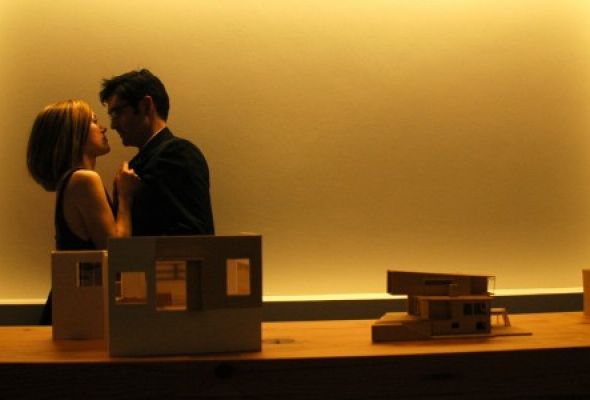
At the interior of this deeply-intense film is a startling glimpse at how identity theft can be more devastating than any other non-violent crime on individual victims. The frightening reality is that more than 10 million people in the U.S. alone, according to the Federal Trade Commission, have discovered that their personal information has been stolen to open fraudulent credit accounts or in some other way used to commit a crime. Indeed, nearly half of all consumer complaints filed with the FCC each year are now identity-theft related.
For Josh Rengert, the actor who portrays him, “I see Dylan as a creator and a visionary who not only imagines the grandness of his architectural ideas, but he has assembled an equally-grand sense of himself.”
 Indeed, like many self-obsessed young professionals today, Dylan’s ego is fused to his personal successes, says Jacob. “We see him as archetype of the current zeitgeist, of the neo-gods. He’s steeped in art and the creative world, but he’s ultimately a selfish go-getter.”
Dylan could easily pass as a prototype for the so-called ‘Creative Class’ – that sector of the working population identified by social scientist Dr. Richard Florida as the innovators who are instrumental to driving today’s global economies.
In fact, the inspiration for Dylan’s appearance and lifestyle came right out of the city’s now-famous Pearl District, a Soho-like amalgam of converted historic warehouses and sleek new high rises like the building Dylan lives in. The Pander brothers can still remember the moment the character popped into focus. “When we were writing the script, a friend of ours invited us to this gathering of top furniture designers from around the Northwest.
 So we show up at this place. Everyone was picking up a vodka tonic and walking around. You see guy after guy with the little sweater and the short hair and the little black glasses. Everyone is like fully groomed, totally designed. It was like being in a room full of Dylan’s! So that became sort of this archetype for our guy.” It’s no coincidence that Portland, Oregon – where the story is set and shot – is not only at the forefront of ‘green’ cities (even its city buses run on biodiesel fuel), it ranks as a major hub for the creative class in fields like advertising, architecture, animation and independent filmmaking. “There’s a definite collective sensibility here behind the laid-back lifestyle and attitude that you can design your own destiny.”
Why did they make Dylan an architect? “Because we’re really fascinated with architecture,” says Arnold. The Pander brothers’ fascination with architecture began with their work illustrating comic books. Jacob would draw the physical environments, while Arnold on the figurative elements. This approach allowed the characters to inhabit a rich and complex world. Gotham City was steeped in contemporary architecture for their DC limited series, Batman: City of light‘.
 The quality of the cinematography and production design is surprising for an independent film – yet not for anyone who knows the Pander brothers’ background. Both grew up literally steeped in the visual arts. Their father, Dutch painter Henk Pander, is a prominent painter whose work is shown throughout the world. Their mother earned a masters degree in fine art, and nurtured their own talents from the time they could hold a crayon. As kids, they were back-stage regulars at Portland’s landmark Storefront Theater, where their father designed installations and stage sets. Both grew up obsessed with film, practically living inside local cinemas when they weren’t in school. And they’re both fine artists with one of the top galleries in Portland – as well as legendary comic book illustrators and creators.

“Jacob and Arnold have a sweeping knowledge of visual mediums,” says “Selfless” cinematographer Kevin Fletcher, a regional Emmy Award-winner who received his masters degree in fine arts from the prestigious School of Visual Arts in New York and has worked with National Geographic, Nike, HP and AOL. “Our first conversations referenced not only movies, but music, photography and fine art.”
